
.webp?width=158&height=85&name=New-logo-Ourgreen%20(1).webp)

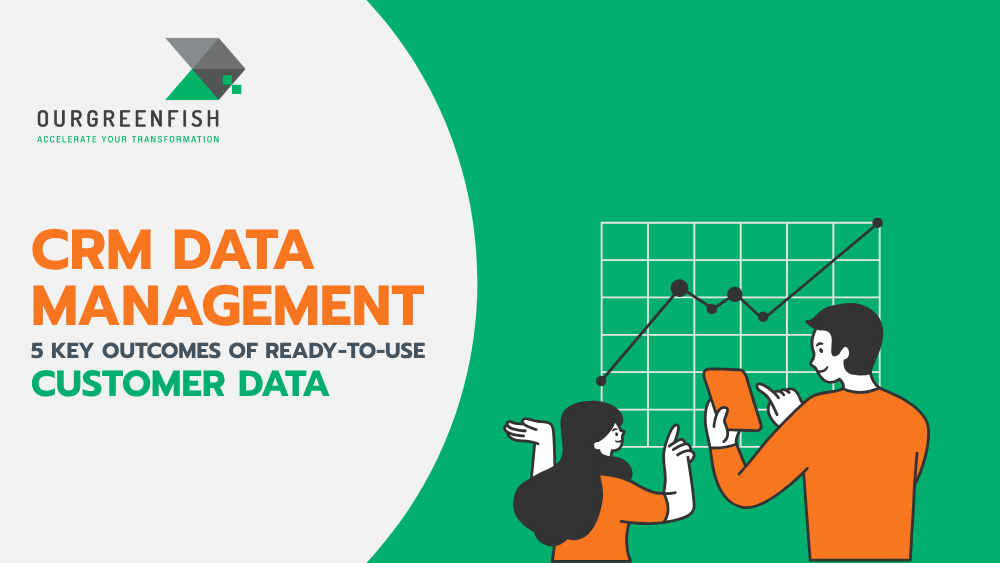
Hearing the term "CRM Data Management" might make you think of boring back-office paperwork or see it merely as an IT duty to keep systems tidy.
But in reality, investing in CRM Data Management means much more than just basic file cleaning. It is a crucial strategy to ensure that the data your team uses every day is accurate, accessible, and trustworthy. When the data in your system is ready to use, here are 5 business outcomes you will get in return.

5 Business Outcomes of CRM Data Management
1. Better Customer Experience Clean CRM data helps create consistency across every customer touchpoint where your business interacts with them. When sales, marketing, and customer service teams work from the same constantly updated dataset, customers don't have to repeat the same stories, and your team will never work with outdated information. Whether it’s cold outreach or negotiating a 5th contract, clean data ensures every conversation is smooth and personalized. What we especially love: An interconnected CRM system allows the Support team to instantly pull up a customer's entire deal history and marketing campaign engagement before even answering the call. This eliminates the problem of delayed internal information handoffs.

2. Easier Compliance In this era, CRM data privacy is not just a legal obligation businesses must follow, but it has become a competitive differentiator. Proper CRM Data Management helps turn this into an easily verifiable automated system through the following methods:
- Tracking: Recording consent sources and opt-in dates at the contact level.
- Honoring Preferences: The system automatically remembers the customer's preferred communication channels, including opt-outs.
- Fast Responses: Capable of quickly and completely deleting customer data from the system upon request.
- Audit Trail: Maintaining a clear record of how and when the data was collected.
Furthermore, compliance and CRM data security must go hand-in-hand. Controlling access to sensitive data, implementing role-based permissions, and keeping a data change history are all practices that will strengthen your organization's overall security.
Pro Tip: You should build consent tracking into your CRM's data collection forms from the very beginning and map those values directly to specific contact properties. This ensures the system records consent the moment data enters, rather than having to fix it later.

3. No More Data Silos When customer data is scattered across various tools, no team in the organization can see the complete picture of the customer. A CRM system breaks down these barriers by acting as a central hub for all teams to input and pull data collaboratively. This increases transparency, ensures smoother sales handoffs, and instantly eliminates the office headache of "whose numbers are actually correct?".

4. Smarter Audience Targeting Generic outreach and marketing campaigns often yield subpar results because they ignore the true customer needs that are already sitting right within your CRM. However, when your data is managed and enriched with firmographics, behavioral signals, deal stages, and engagement history, your team can create precise segmentation that reflects real buying intent. The Return: Your marketing campaigns will be highly efficient, ads will be more targeted, and the sales team can contact customers at the right time and place, truly influencing purchasing decisions. Pro Tip: Try pairing deal stage data with behavioral signals, like email clicks or website visits, to build dynamic segments that automatically update contact lists as buyers move down the funnel.

5. Cleaner Data, Better Decisions Pipeline forecasts, churn analysis, and executive Quarterly Business Reviews (QBRs) are only as reliable as your CRM data quality. If data is duplicated, blank, or inconsistently logged, it causes delays and reduces confidence in using those numbers to drive and manage the business. Conversely, when CRM data is accurate and continuously managed, RevOps and executive teams can make business decisions faster and with greater confidence. You can trust that the numbers on your dashboard are a true reflection of what is actually happening in your business.
Conclusion: Investing in CRM Data Management isn’t just about organizing data beautifully; it’s about creating a data asset ready to drive sustainable revenue and growth. If your back-office data still isn't good enough, start improving it today to maximize your CRM system's efficiency and value.
Reference: HubSpot. (2026). Keep Customer Data Up to Date Everywhere. Retrieved from https://blog.hubspot.com/marketing/keep-customer-data-up-to-date-everywhere
Read more articles: CRM Data Management: A Checklist of 6 Data Categories That Need Immaculate Cleaning (CRM Data Management: เช็กลิสต์ 6 หมวดข้อมูลที่ต้องคลีนให้เนี๊ยบ)

Contact us
Tel : 024-609-599
E-mail : contact@ourgreen.co.th
Website : ourgreenfish.com






No Comments