.webp?width=158&height=85&name=New-logo-Ourgreen%20(1).webp)

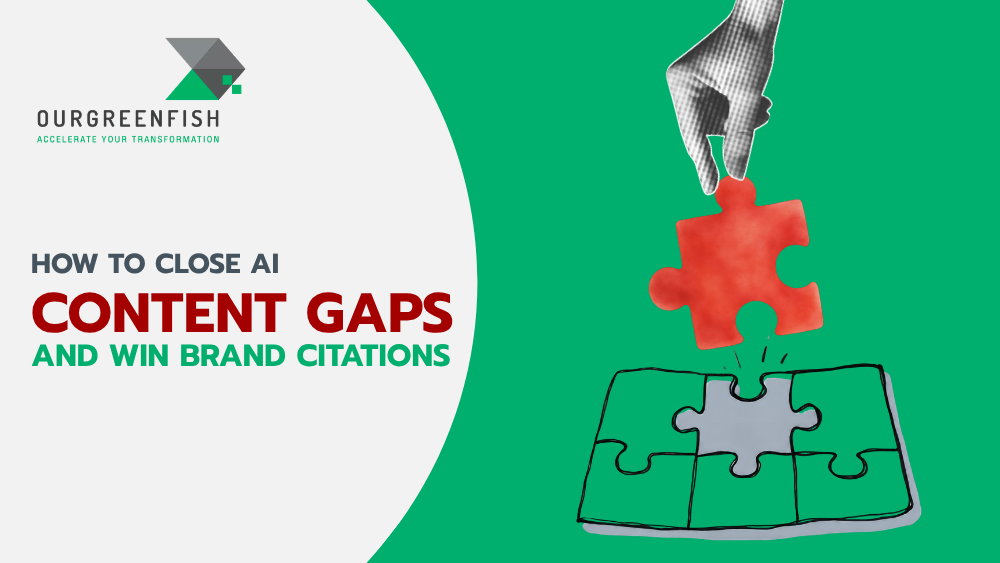
Imagine your target customers typing detailed queries into ChatGPT or Perplexity asking for product or service recommendations that your business offers. Yet, the AI fetches data and links citations solely to your competitors, leaving your brand completely unmentioned. As a business owner, this is a clear warning sign that your website is suffering from a major content gap.
Ranking well on Google while having a zero citation rate from AI usually stems from a Content Gap—the disconnect between the content your brand possesses and the formats Answer Engines trust and utilize. Leaving this gap unaddressed means missing out on vital leads and pipeline growth. Learning how to plug these content gaps and optimize your website for AI retrieval has become an urgent strategy that modern business leaders can no longer ignore.
Direct Answer: Closing Content Gaps to increase AI citations is a three-step process: analyzing AI-trusted sources (Trusted-Source Analysis), building a high-trust content plan prioritized by impact and feasibility, and optimizing on-page structure so Answer Engines can easily retrieve and cite your content.

What Is a Content Gap in the AI Search Era and Why Should Business Owners Care?
In the Answer Engine Optimization (AEO) era, a Content Gap goes deeper than just missing keywords. It refers to the disparity between "Target Prompt Coverage" (the queries you aim to monitor) and "Actual Citations" (being referenced in AI-generated answers).
Closing this gap enables your brand to be cited and ranked prominently by AI, turning visibility into qualified leads and revenue.
3 Steps to Close Content Gaps and Boost AI Citations
To transform your website into an authoritative source for AI systems, your marketing team should execute these three core steps:
Step 1: Run a Trusted-Source Analysis
Before creating or updating content, investigate which URLs or domains Answer Engines currently pull from for specific prompts and why.
- Extract prompt data: Pull reports from your AEO Prompt Tracking for every query where your brand is unreferenced. Record competitor sources, specifying domain names, page types (e.g., glossaries, research reports, product pages, comparison articles), and content formats.
- Identify source patterns: Pinpoint the structural formats Answer Engines consistently favor, such as definition pages, glossaries, research data, or objective comparison content.
- Audit internal content: Compare your brand’s content against these findings to identify and bridge gaps (e.g., adding missing glossary pages that competitors leverage).
Step 2: Build a Sourcing Plan for High-Trust Content
Once you identify these patterns, build a content creation plan focusing on three proven high-citation formats:
- Reference Pages and Glossaries: Separate, concise definition pages for key terminology are heavily favored by AI over definitions buried in long articles because they are easier to retrieve.
- Original Data and Benchmarks: AI favors specific statistics, survey results, and industry benchmarks. Publishing proprietary data acts as a magnet for citations.
- Comparison and "Best of" Content: For comparative or tool-selection prompts, AI pulls from thorough, objective evaluations rather than self-promotional product pages.
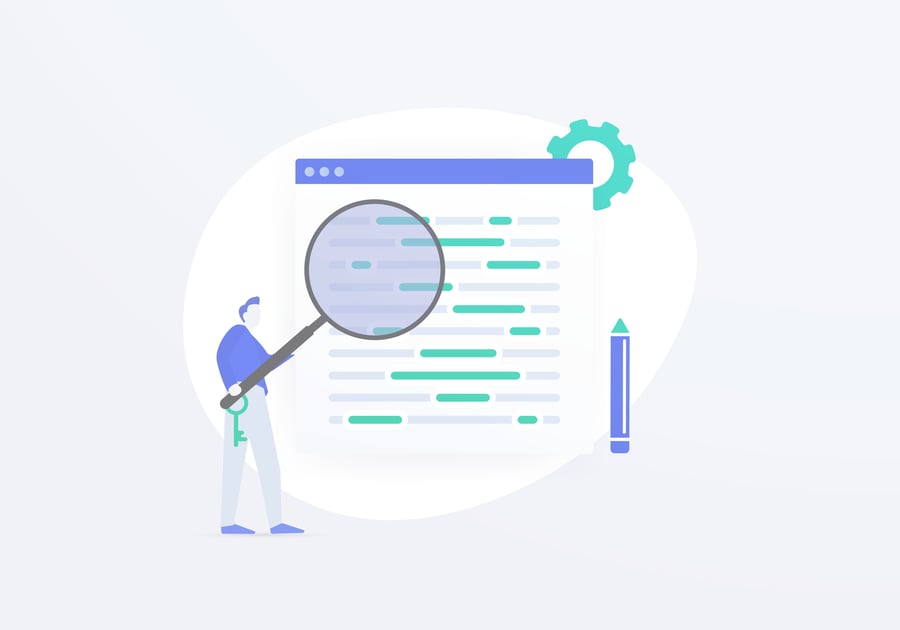
Step 3: Optimize On-Page Patterns for AI Retrieval
Organize on-page elements to make data extraction seamless for Answer Engines:
- Definition Boxes: Place clear, concise definitions within the first 200 words using a fixed format, such as [Term] is [plain language explanation].
- Short Q&A Sections: Add FAQ blocks addressing real user prompts, keeping answers within 2 to 4 sentences for optimal extraction.
- Consistent Entity Usage: Maintain consistent names for your brand, products, and categories across the entire page (e.g., avoid switching between "HubSpot CRM", "HubSpot Platform", and "Our CRM"). Inconsistency causes processing confusion.
- Internal Links to Canonical Sources: Link articles back to core reference or pillar pages to signal clear context and authority to AI.
- Schema Markup: Implement structured data like FAQ Schema, Article Schema (with clear author and date attributes), or Product Schema to eliminate ambiguity and streamline AI scraping.
Pro Tip: Platforms like HubSpot Content Hub help marketing teams manage and optimize large-scale web structures—including FAQs, internal linking, and Schema markup—within a single content management system.

Prioritizing Content Gap Closure Using Impact and Feasibility
Business owners should guide marketing teams to prioritize the content backlog using two data-backed criteria rather than intuition:
- Impact: Assess how critical the gap is to your tracked prompt set. For example, a missing glossary term relevant to 15 high-priority prompts yields higher impact than a niche comparison page supporting only 2 prompts.
- Feasibility: Evaluate technical difficulty and required resources. Determine whether a piece can be completed within the current quarter using existing bandwidth, or if it requires primary research, complex design, or cross-team alignment.
Combining Impact and Feasibility yields a data-driven content roadmap backed by AEO Prompt Tracking.

Frequently Asked Questions About AI Search Content Gaps
Which content formats do AI engines cite most frequently? Answer Engines favor concise reference/glossary pages, original statistics and industry benchmarks, and objective, in-depth comparison articles. These structured formats allow AI engines to process and synthesize answers seamlessly.
Why does inconsistent brand naming create a Content Gap for AI? AI processes information through named entities. Inconsistent brand or product naming creates ambiguity in entity relationship mapping, causing Answer Engines to skip your content when attributing citations. (Tip: Implement FAQ Schema Markup on your backend to minimize ambiguity and improve AI scraping efficiency).
Closing Content Gaps in the AI Search era is an essential strategy for turning your website into a trusted authority cited by Answer Engines. Performing trusted-source analysis, producing high-impact content, and systematically optimizing on-page structure provides a distinct competitive advantage. Want to elevate your business's SEO and AEO strategy? Consult Ourgreenfish today.
Reference: HubSpot. (2026). AEO prompt tracking for marketing teams. Retrieved from https://blog.hubspot.com/marketing/aeo-prompt-tracking
Read more articles : Why Businesses with Customer Data and CRM Gain an Advantage in the AEO and AI Era (ทำไม AEO ในยุค AI ธุรกิจที่มี Customer Data และ CRM จะได้เปรียบกว่า)

Contact us
Tel : 024-609-599
E-mail : contact@ourgreen.co.th
Website : ourgreenfish.com





No Comments