
.webp?width=158&height=85&name=New-logo-Ourgreen%20(1).webp)

In today’s digital landscape, customers interact with brands through more channels than ever before—whether through websites, social media, email, or chat platforms. As a result, managing customer data has become a major challenge for many businesses.
This is especially true for organizations that still rely on multiple disconnected tools such as spreadsheets, email marketing platforms, or basic customer management systems. Common problems include scattered customer data, sales teams lacking full visibility into interaction history, and marketing teams being unsure where prospects are in the buying journey.
This is why many organizations are adopting CRM Automation as the central system for managing customer relationships. A modern CRM automation platform can consolidate customer data in one place while providing automation and AI tools that enable teams to work faster and make better decisions.
Here are five key reasons why modern businesses should adopt CRM automation platforms like HubSpot CRM.

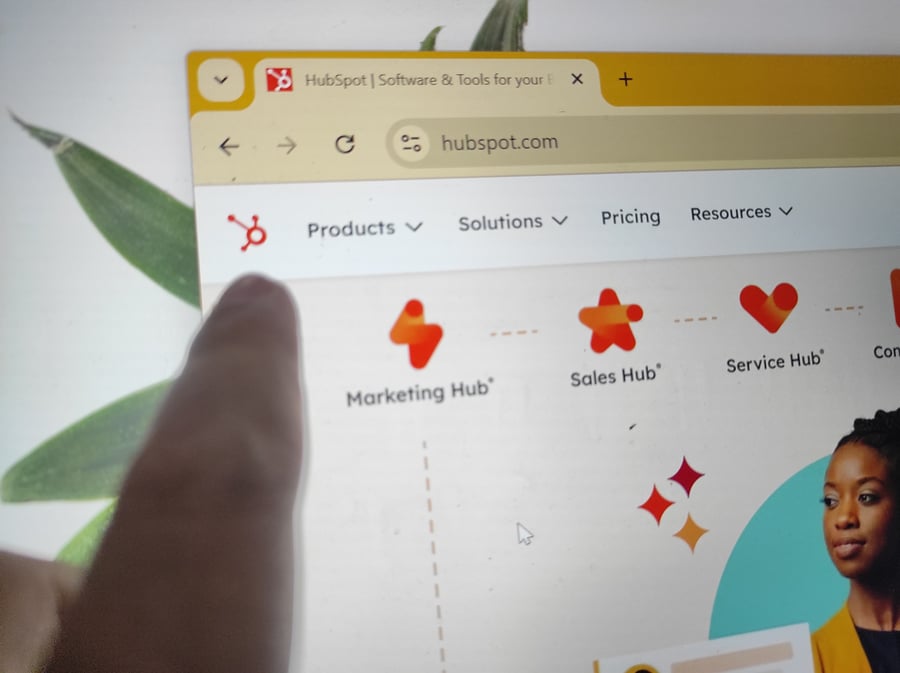
1. Centralize All Customer Data in One System
One of the most common challenges organizations face is that customer data exists in multiple locations, such as:
- Leads stored in Facebook Lead Ads
- Customer data recorded in Excel files
- Conversations happening through email
- Purchase history stored in separate systems
When information is scattered across different platforms, teams cannot see the complete picture of the customer.
CRM automation platforms like HubSpot CRM are designed to solve this issue by serving as a Single Source of Truth, consolidating all customer information within one platform.
This allows marketing, sales, and customer service teams to access the same unified customer data.
Having a 360-degree customer view enables businesses to better understand customer behavior and deliver more personalized experiences.
2. Reduce Manual Work for Sales Teams with Automation
Many sales teams spend significant time on administrative tasks that are not directly related to selling, such as:
- Sending follow-up emails
- Logging customer data
- Setting reminders for follow-ups
- Updating deal stages
These repetitive tasks consume valuable time.
CRM automation systems can automatically handle these processes, for example:
- Sending automated follow-up emails
- Assigning leads to the appropriate sales representative
- Creating tasks when a customer opens an email
- Updating sales pipelines automatically
In HubSpot Sales Hub, sales teams can create Sequences that automatically send personalized follow-up emails. The system also tracks customer engagement such as email opens and link clicks.
As a result, sales teams can spend more time focusing on building relationships and closing deals.
3. Connect Marketing, Sales, and Service Teams
Another common issue within many organizations is that teams operate in separate systems.
For example:
- Marketing generates leads
- Sales manages the opportunities
- Service teams handle post-sale support
However, the information between these teams often remains disconnected.
CRM automation platforms such as HubSpot’s Customer Platform bring these functions together into a single system.
For example:
- A customer sees an advertisement and submits a form on a website.
- The lead is automatically captured in the CRM.
- The system assigns the lead to a sales representative.
- The sales team follows up with the customer.
- After closing the deal, the service team can view the full interaction history.
This unified workflow creates a seamless customer experience, which is essential for maintaining customer satisfaction.
4. AI Helps Increase Sales Opportunities
Artificial intelligence is playing an increasingly important role in modern CRM platforms.
In HubSpot CRM, AI tools can assist sales teams in several ways, including:
- Analyzing customer behavior
- Recommending the next best action
- Assisting with email writing
- Automatically logging call information
- Prioritizing leads
AI tools such as Breeze Copilot analyze customer data and recommend the most effective next steps—such as which prospects to contact first or what message to send.
This helps sales teams make faster decisions and increase their chances of closing deals.
5. A Platform That Scales with Your Business
Many businesses initially use multiple tools, such as:
- Email marketing software
- Separate CRM systems
- Customer support tools
- Analytics platforms
As the business grows, these tools often struggle to integrate effectively.
One of the strengths of HubSpot CRM is its flexibility. Businesses can start using the platform for free and gradually add more capabilities as their needs evolve, including:
- Marketing automation
- Sales automation
- Customer service tools
- Advanced analytics and reporting
The platform can also integrate with other systems through APIs and the HubSpot App Marketplace, allowing businesses to build an ecosystem tailored to their needs.
This flexibility is why HubSpot CRM is widely considered suitable for both small businesses and growing organizations.

In today’s highly competitive business environment, understanding customers and responding quickly to their needs is more important than ever.
CRM Automation is not just about storing customer data—it is about building a system that enables the entire organization to operate more efficiently.
A CRM automation platform can help businesses:
- Centralize customer data in one place
- Reduce manual tasks for sales teams
- Connect marketing, sales, and service teams
- Use AI to increase sales opportunities
- Support long-term business growth
For business owners looking for a modern customer management solution, choosing a CRM automation platform that combines customer data, automation, and AI in one system can be one of the most valuable investments for long-term success in the digital era.
Reference: HubSpot. (2026). CRM tools with automation: Our top picks for 2025. Retrieved from
https://blog.hubspot.com/sales/crm-automation-for-sales
Read more articles : What is CRM and what are its benefits for business? (การทำ CRM คือ อะไร มีประโยชน์อย่างไรในการทำธุรกิจ)

Contact us
Tel : 024-609-599
E-mail : contact@ourgreen.co.th
Website : ourgreenfish.com





No Comments